

Digital Colliers Daily Briefing — May 10, 2026
The AI buildout's financial plumbing, labor consequences, and security externalities all surfaced on the same day. Nvidia's equity commitments crossed $40 billion for the year so far, even as Department of Labor data showed the IT sector shedding jobs and Experian quantified AI's growing footprint in data breaches. Together, the three stories sketch an ecosystem where capital is concentrating rapidly, the labor base is contracting, and the attack surface is expanding.
1. Nvidia's $40B equity push tightens the AI capital loop
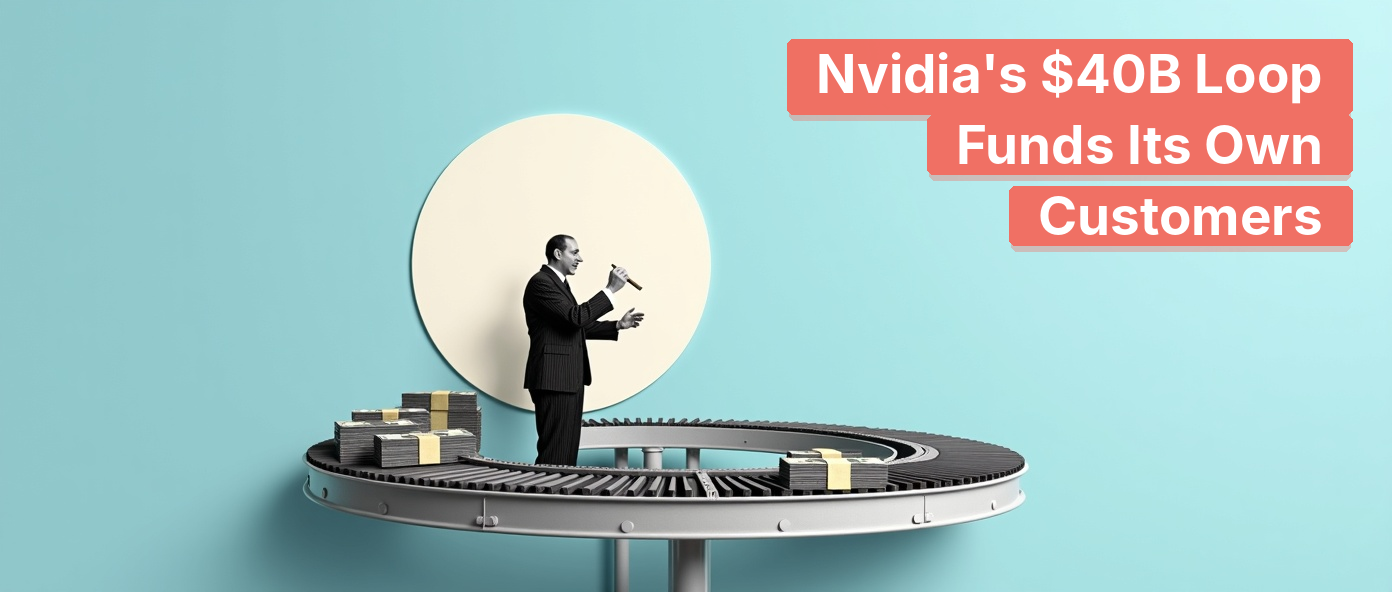
What happened. Nvidia has committed more than $40 billion to equity investments in AI companies in the opening months of 2026, according to CNBC reporting cited by TechCrunch. The bulk — $30 billion — flows into OpenAI, but the chipmaker has also announced seven multi-billion-dollar deals in publicly traded firms, most recently up to $3.2 billion in glassmaker Corning and up to $2.1 billion in Australian AI data center operator IREN. FactSet data indicates Nvidia has already joined roughly two dozen private startup rounds this year, on top of 67 venture deals in 2025. Hours later, IREN announced a $625 million all-stock acquisition of Mirantis, a Kubernetes management and cloud infrastructure vendor, in a deal Data Center Knowledge frames as a move to convert deployed GPUs into "revenue-generating AI infrastructure."
Why it matters. The pattern reinforces what Wedbush analyst Matthew Bryson, quoted by TechCrunch, calls a "circular investment theme": Nvidia takes equity in customers that, in turn, buy Nvidia silicon and now stand up the software layer needed to monetize it. Bryson argues the strategy could harden a "competitive moat" if the bets pay off, but the same structure obscures end demand and concentrates counterparty risk inside a single supplier's balance sheet. The IREN–Mirantis transaction is a clean example of the downstream cascade: Nvidia capital flows to a data center operator, which then buys an orchestration stack to operationalize the GPUs.
Who is affected. OpenAI, Corning, IREN, and the broader cohort of Nvidia-backed publics gain balance-sheet support and preferential access to constrained supply. Competing chipmakers — AMD, custom-silicon programs at hyperscalers — face a customer base increasingly entangled with Nvidia's cap table. Public-market investors and auditors will need clearer disclosure on revenue derived from entities Nvidia has funded. Mirantis shareholders exit into IREN equity.
What to watch next. Whether the SEC or international regulators begin scrutinizing related-party revenue recognition; the cadence of Nvidia's next equity announcements heading into its August fiscal-quarter print; and whether IREN's integration of Mirantis converts into measurable enterprise AI revenue rather than internal tooling.
Sources:
2. IT unemployment climbs to 3.8% as 13,000 jobs vanish
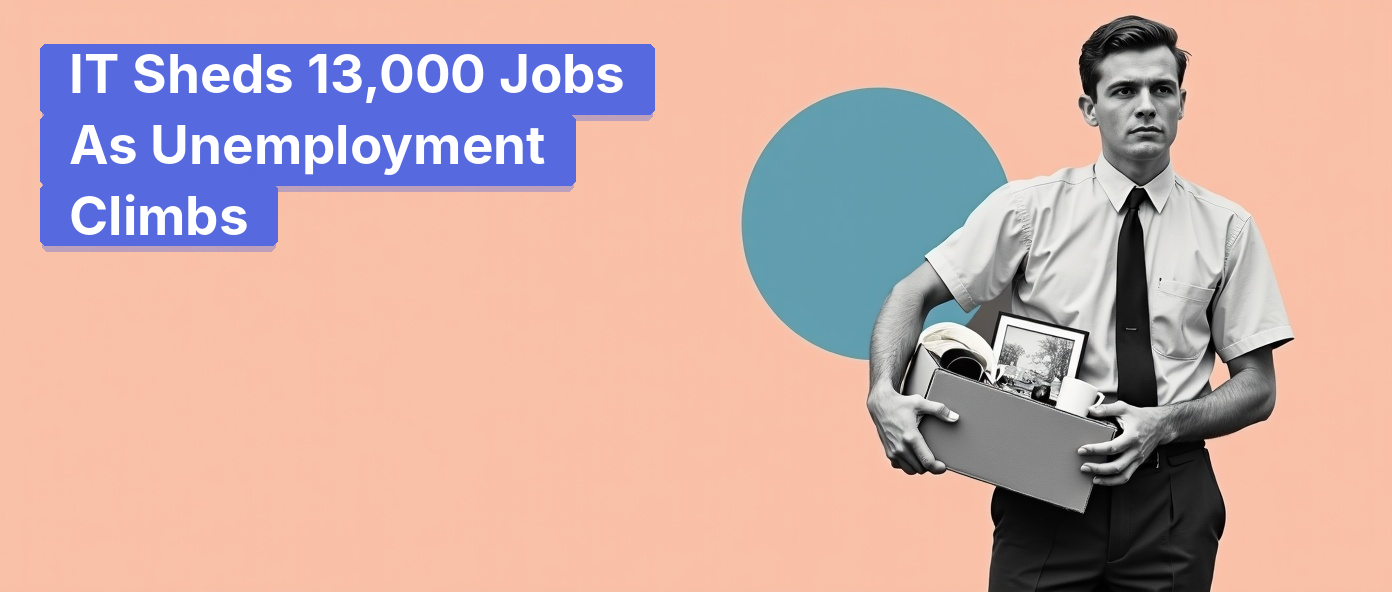
What happened. A Wall Street Journal analysis of Department of Labor data, reported by Belle Lin, finds the IT sector's unemployment rate rose from 3.6% in March to 3.8% in April, with 13,000 jobs eliminated over the month. The Journal attributes the contraction to ongoing "AI uncertainty" — a mix of automation-driven role consolidation and hiring pauses as employers reassess headcount needs. The data lands alongside a New York Times feature, widely circulated on Hacker News, on collapsing morale at Meta as employees navigate aggressive internal AI mandates.
Why it matters. The IT unemployment rate has historically tracked below the national average; a 20-basis-point monthly jump is a sharp move for a sector that consumed talent at near-saturation levels two years ago. The numbers translate the abstract debate over AI-driven displacement into concrete payroll losses, and they arrive while capital expenditure on AI infrastructure — see Event 1 — runs at record levels. The divergence between capex up and headcount down is the defining tension of the current cycle.
Who is affected. Mid-career engineers, QA staff, and IT operations roles appear most exposed in the WSJ's framing, with junior pipelines also narrowing as code-generation tools absorb entry-level work. Inside Meta, the Times reporting describes employees burning out under directives to ship AI features and adopt internal AI tools, suggesting that even retained workers face deteriorating conditions. Universities and bootcamps face a credibility problem if the on-ramp continues to close.
What to watch next. The May jobs report, due early June, will indicate whether April was an inflection or a blip. Watch also for severance disclosures from large-cap tech employers in upcoming 10-Qs, and for any policy response — retraining funding, AI-displacement reporting requirements — from the Department of Labor.
Sources:
3. Experian: 40% of 2025 breaches were AI-powered, agentic AI tops 2026 forecast

What happened. Experian, in figures reported by Jennah Haque at Bloomberg, says 40% of the roughly 5,000 data breaches it serviced in 2025 involved AI-assisted techniques — phishing generation, deepfake-enabled social engineering, automated credential abuse — and predicts that agentic AI will be the leading cause of breaches in 2026. The report opens with a vignette about a fraudulent enrollment letter from a fictitious "Ultimate Medical Academy," underscoring how cheaply AI now generates plausible identity-theft artifacts at scale.
Why it matters. A credit bureau with direct breach-response visibility putting a number on AI's contribution converts anecdote into baseline. The 2026 forecast — that autonomous, tool-using agents will outpace human-directed attacks — would mark a structural change in threat modeling: defenders accustomed to pattern-matching campaign infrastructure must instead anticipate adversaries that plan, pivot, and chain APIs without operator latency.
Who is affected. CISOs and cyber-insurance underwriters face immediate pressure to reprice risk and tighten controls around identity, machine-to-machine authentication, and agent governance. Consumers — particularly those with leaked credentials in prior breaches — see continued downstream fraud. SaaS vendors deploying agentic features into enterprise workflows now carry an explicit security narrative they will be required to defend.
What to watch next. Whether NIST or CISA publishes formal guidance on agentic-AI threat models in the coming months; insurer policy language adjustments around AI-driven incidents; and whether Experian's 2026 mid-year update revises the agentic forecast upward or downward against observed incidents.
Sources:
The three stories rhyme. Nvidia's capital is funding the infrastructure layer that displaces IT workers and that, deployed without commensurate controls, expands the agentic attack surface Experian is warning about. The AI cycle's winners, casualties, and externalities are no longer hypothetical categories — each now has a number attached, and those numbers are moving in the same direction at the same time.