

Digital Colliers Daily Briefing — June 15, 2026
Three stories today illustrate how rapidly the rules of the technology industry are being rewritten by governments and consolidators. In Washington, the White House has invoked export controls to forcibly disable Anthropic's most capable model, opening a new front in AI governance. In London, Keir Starmer announced the most expansive Western restriction on minors' access to social media to date, extending beyond Australia's template to cover AI companions and overnight curfews. And in New York, Fox struck a roughly $22 billion deal to acquire Roku, betting that distribution into 100 million-plus households is worth more than its current market cap suggests. Each story is, in its own way, about who gets to set the terms of access — to frontier models, to platforms, and to the living room.
1. Washington Pulls the Plug on Claude Fable 5 and Mythos 5

What happened. Late Friday, the White House issued an export control directive ordering Anthropic to suspend all access to its Fable 5 and Mythos 5 models for any foreign national, whether inside or outside the United States — including Anthropic's own foreign-national employees. Per Anthropic's disclosure, the directive landed at 5:21pm ET and forced the company to disable the models entirely for its customer base to ensure compliance. Other Anthropic models remain available.
The trigger, according to reporting compiled by AI Explained and Semafor (via The Verge), was a jailbreak demonstration routed to the administration by Amazon — Anthropic's largest investor and inference provider — combined with concerns that a China-linked group may have obtained access to the model. Anthropic, for its part, said the demonstrated jailbreak surfaced only a small number of previously known, minor vulnerabilities that other public models can also find. Senior Anthropic leadership has been in Washington since the weekend trying to negotiate the directive's reversal.
Why it matters. As Nathan Lambert frames it at Interconnects, this is "the starting gun" of AGI-era governance: an executive branch with limited technical talent now feels empowered to gate model releases on short notice and on contested evidence. Ben Thompson at Stratechery argues the episode also exposes the contradictions in Anthropic's posture — a company that has spent years arguing models of this class are weapons-grade now finds the government taking that framing literally. A widely circulated Hacker News essay went further, arguing Dario Amodei's own "Policy on the AI Exponential," published days earlier, effectively requested precisely this regulatory mechanism.
Who is affected. Enterprise customers building on Fable and Mythos lost production access without warning. Anthropic's foreign-national engineers are locked out of their own company's flagship systems. Amazon's role as the conduit for the underlying intelligence creates an awkward dynamic with its portfolio company. Meanwhile, a coalition of CISOs and security executives from Adobe, Zoom, and Sophos has written to the White House arguing the ban hurts defenders more than attackers, according to Axios.
What to watch next. Whether Treasury Secretary Bessent — reportedly the lead negotiator — and Anthropic reach a narrowed re-release agreement in days rather than weeks; whether the directive sets a template applied to OpenAI, Google, or open-weights releases; and whether the China-access reporting is confirmed, which would substantially harden the political case for continued restrictions.
Sources:
- Anthropic's Safety Superpower — Stratechery (free)
- Welcome to the AGI era of AI governance — Interconnects
- Letter: US cybersecurity leaders urge the White House to lift the ban on Anthropic's Mythos 5 and Fable 5, arguing the move hurts defenders more than attackers (Sam Sabin/Axios) — Techmeme
- China may have accessed Mythos — The Verge AI
- [HN · 187↑] Did Anthropic ask for this? — Hacker News
- Claude Fable Blocked - 11 Quiet Details on What's Next — YouTube · AI Explained
2. Starmer's "Australia-Plus" Ban Pulls Under-16s Off the Major Platforms
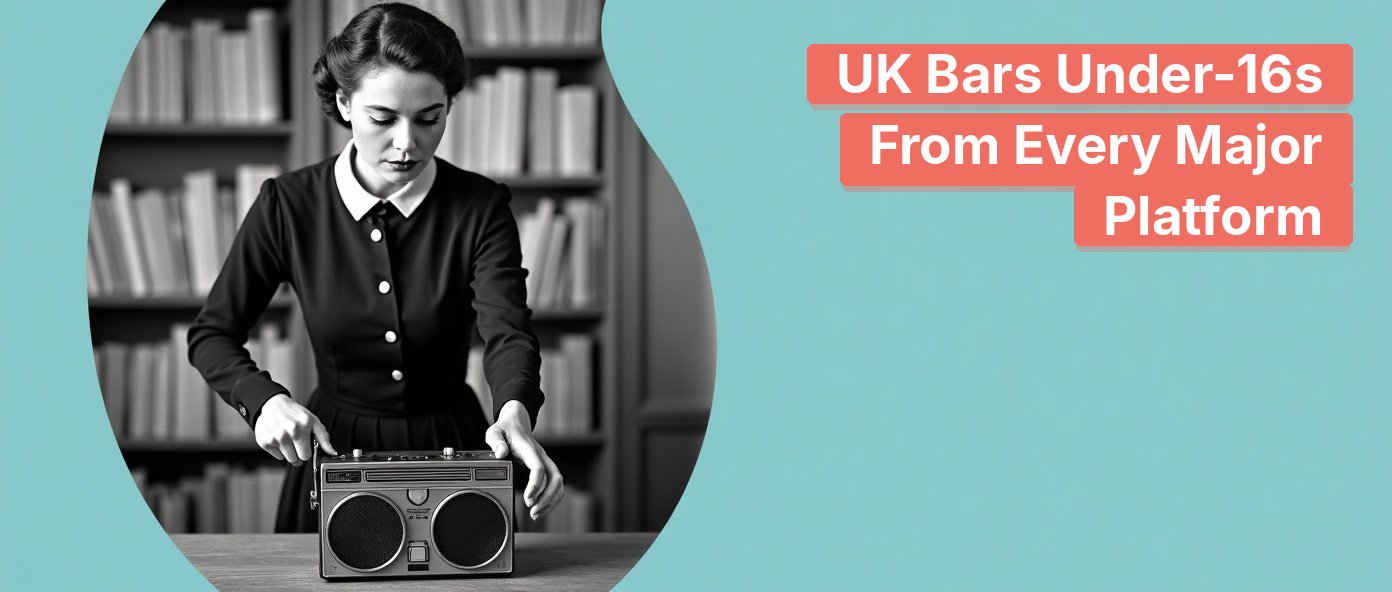
What happened. Prime Minister Keir Starmer announced that the UK will bar under-16s from Facebook, Instagram, X, TikTok, Snapchat, YouTube, Threads, and Reddit, with the rules taking effect in spring 2027. The package extends beyond Australia's November 2025 framework in three ways: it raises the minimum age for romantic or sexual AI chatbots to 18, bans livestreaming and stranger-contact features for under-16s across all platforms, and floats an overnight social-media curfew for under-18s, with details due in July. WhatsApp and Signal are excluded. The government has framed the package as "Australia-plus," and according to Wired, has signalled tougher age-verification requirements than Australia's, where eSafety found 70% of under-16s still access banned platforms.
Why it matters. The UK is the largest Western economy to adopt a hard-age model rather than the design-focused "duty of care" approach favoured by groups like the Molly Rose Foundation. The consultation drew about 116,000 responses — the second-largest in UK history — and roughly 90% of parents who responded backed an outright ban, per Wired. Industry pushback was immediate: YouTube argued the policy pushes children "towards anonymous, less safe services," and Snap warned that severing teenagers from private messaging with friends and family will not improve safety.
Who is affected. Meta, ByteDance, Google, Snap, X, and Reddit face an age-verification build-out at population scale in a major market. AI companion firms — Character.AI, Replika, and the consumer-facing romantic features increasingly being added by general-purpose chatbots — face an effective 18+ designation in the UK. Compliance costs will be substantial, and as Wired notes, the policy could escalate friction with the Trump administration, which formally pushed in its consultation submission for narrower restrictions limited to pornographic content. Reddit's pending Australian lawsuit offers a likely template for legal challenge.
What to watch next. The full consultation findings, due by end of summer; the curfew design landing in July; whether Ofcom is given new verification-enforcement powers under an expanded Online Safety Act; and whether VPN usage among UK teenagers spikes the way it has in Australia, undercutting enforcement before the rules take effect.
Sources:
- The UK Places a Sweeping Ban on Social Media for Kids Under 16 — Wired
- The UK's social media ban will cover Snapchat, TikTok, YouTube, Instagram, Facebook, X, and more, and will require platforms to stop children from livestreaming (Liv McMahon/BBC) — Techmeme
- Keir Starmer says the UK will ban social media for under-16s in an "Australia-plus model" to "give kids their childhood back", set to take effect in spring 2027 (Reuters) — Techmeme
- [HN · 157↑] UK set to announce social media ban for under-16s — Hacker News
3. Fox Buys Roku for $22 Billion to Own the Streaming Front Door

What happened. Fox Corp. announced an agreement to acquire Roku in a deal worth roughly $22 billion including debt, financed in part by a $12 billion loan. Per CNBC, existing Fox shareholders will own about 73% of the combined company and Roku shareholders about 27%. The Wall Street Journal reports the transaction gives Fox direct access to more than 100 million streaming households. Investors penalised Fox immediately, with shares down more than 12% in pre-market trading.
Why it matters. Fox has been the most distribution-dependent of the major US media companies, leaning on cable carriage and on Tubi for its streaming exposure. Acquiring Roku converts Fox from a pure content supplier into the owner of one of the largest connected-TV operating systems in the United States — and crucially, of the home screen, the ad inventory, and the user data that flow from it. The deal echoes Amazon-MGM and the broader pattern of distribution platforms and content libraries collapsing into single entities, but with the unusual twist of a traditional broadcaster acquiring the platform rather than the reverse.
Who is affected. For Roku shareholders, the deal monetises a company whose hardware-and-ads model has struggled to translate massive user reach into consistent profitability. For competing CTV platforms — Amazon Fire TV, Google TV, Samsung Tizen, Vizio (now owned by Walmart) — Fox-Roku creates a content-incentivised rival willing to subsidise distribution. For ad-supported streamers including Tubi, Pluto, and the FAST tier on Roku itself, vertical integration raises questions about preferential placement and inventory access. The pre-market sell-off in FOX suggests investors view the leverage required and the integration risk as significant.
What to watch next. Regulatory review under an administration that has been unpredictable on media M&A; whether Tubi is folded into Roku's home-screen architecture or kept distinct; any signal on how Roku's neutrality toward competing streamers (Netflix, Disney+, Max) is preserved or eroded; and the post-deal trajectory of Roku's ad business, which is the strategic prize.
Sources:
- Fox plans to acquire Roku in a deal worth ~$22B, including debt, giving it access to 100M+ streaming households; FOX drops 12%+ pre-market (Joseph De Avila/Wall Street Journal) — Techmeme
- Fox says it obtained a $12B loan for the ~$22B Roku deal; existing Fox shareholders are expected to own ~73% of the combined company and Roku shareholders ~27% (Lillian Rizzo/CNBC) — Techmeme
The through-line across today's three stories is control of the interface between technology and the user. Anthropic is discovering that owning the most capable model does not guarantee the right to deploy it; the UK is asserting that platforms cannot decide for themselves which users they serve; and Fox is paying $22 billion on the premise that whoever owns the home screen captures the value above it. Each is a wager on where leverage actually sits in the stack — and in every case, the answer is moving closer to the point of distribution.